
Precision, consistency and contamination control are essential for today’s manufacturing. From semiconductor manufacturing to medical devices, aerospace parts, pharmaceuticals, and high-tech laboratory research and development, contamination, no matter how insignificant, can impact product quality, process performance, and productivity.
Specialty & UHP Gases are essential for quality, efficiency and safety during these processes. Choosing the right helium gas supplier Dubai, helium tank supplier or liquid helium supplier could be the difference between running a business at an optimum level or facing inevitable delays.
Thus, it is important to consider which supplier will provide the ultra high purity gases to the organization with consistent gas quality, reliable supply, appropriate documentation and suitable delivery systems.
This article explains what ultra-high purity gases are, why purity matters, the applications of commonly used high-purity gases, how gas suppliers maintain quality, and what procurement teams should consider when sourcing high-purity industrial and specialty gases.
What Are Ultra-High Purity Gases?
The industrial gases or speciality gases are the ones that have been refined to very low content. Ultra-high purity gases are gases supplied with extremely low concentrations of impurities. Purity specifications vary according to the gas, application, and industry, with levels such as 99.999% (5N) or higher commonly used for demanding applications.
The gases used in high-purity applications can include helium, nitrogen, argon, oxygen, hydrogen, and specialty gas mixtures. The required purity and impurity limits depend on the specific process and the customer’s technical requirements.
UHP gases are particularly important where contaminants such as moisture, oxygen, hydrocarbons, particles, or other trace substances could affect a manufacturing process, laboratory measurement, or sensitive equipment.
Common Applications of Ultra-High Purity Gases
Ultra-high purity and specialty gases are used across a wide range of industries, including:
- Semiconductor and electronics manufacturing
- Analytical and research laboratories
- Cryogenics and superconducting systems
- Pharmaceutical and medical applications
- Aerospace and advanced manufacturing
- Calibration and analytical instrumentation
- Controlled and inert processing environments
The semiconductor industry is one example where high-purity nitrogen, oxygen, argon and hydrogen are used in demanding manufacturing processes.
Common High-Purity Gases and Their Uses
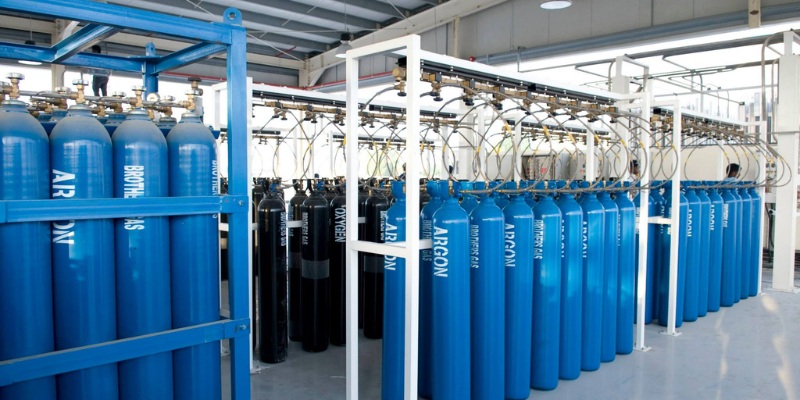
High-Purity Helium
Helium is an inert gas with important applications in cryogenics, superconducting systems, research, leak detection, and specialized manufacturing processes.
Liquid helium
Liquid Helium is particularly important for applications requiring extremely low temperatures, including superconducting systems and certain medical and research equipment.
High-Purity Nitrogen
Nitrogen is widely used as an inert gas for applications where oxygen and moisture need to be minimized. In semiconductor manufacturing, nitrogen is used for purging, process applications, and other controlled environments.
High-purity nitrogen can also be used in laboratories, pharmaceutical processes, electronics manufacturing, and other applications where controlled atmospheres are required.
High-Purity Argon
Argon is an inert gas commonly used where an oxygen- and nitrogen-free environment is required. In semiconductor manufacturing, argon can be used in plasma deposition and etching processes.
It is also widely used in metal processing, welding, laboratory applications, and other controlled-atmosphere processes.
High-Purity Oxygen
High-purity oxygen is used in selected industrial, laboratory, healthcare, and electronics applications where the required specification calls for controlled oxygen quality.
The appropriate grade should always be selected according to the intended application and applicable technical or regulatory requirements.
High-Purity Hydrogen
Hydrogen is used in specialized manufacturing and electronics applications. In semiconductor manufacturing, hydrogen can be used for processes such as silicon and silicon-germanium epitaxial deposition and surface preparation.
Hydrogen is also used in chemical processing and other applications requiring a controlled reducing or specialized atmosphere.
Specialty Gas Mixtures
Specialty gas mixtures are formulated for specific analytical, calibration, laboratory, and process applications.
They can be used for:
- Instrument calibration
- Gas chromatography
- Analytical testing
- Laboratory research
- Process monitoring
- Environmental analysis
The exact gas composition and purity requirements depend on the instrument or process.
Why Is Gas Purity Non-Negotiable?
In sensitive manufacturing and research environments, even trace levels of unwanted substances can affect results, process stability, or product quality.
The impact of contamination depends on the application, the gas, the equipment, and the type and concentration of the impurity.
1. Semiconductor & Electronics Manufacturing
Semiconductor manufacturing involves highly controlled processes where gas quality is critical. Nitrogen, oxygen, argon and hydrogen are among the gases used in semiconductor manufacturing.
Unwanted moisture, oxygen, hydrocarbons, particles, or other contaminants can interfere with sensitive processes and potentially contribute to:
- Reduced manufacturing yields
- Process instability
- Product defects
- Equipment contamination
- Increased production costs
For this reason, semiconductor manufacturers require gases that meet carefully defined purity and impurity specifications.
2. Superconducting Systems and Cryogenics
Helium is widely associated with cryogenic applications because of its extremely low boiling point.
Liquid helium is used in systems that require extremely low temperatures, including superconducting applications and specialized research equipment.
In cryogenic systems, gas quality and system cleanliness are important because contamination can affect equipment performance, reliability, and maintenance requirements.
3. Analytical and Research Laboratories
High-purity gases are essential for many analytical instruments and laboratory processes.
For example, gas chromatography and spectroscopy can require gases with tightly controlled impurity levels. Contaminants can affect instrument performance, baseline stability, measurements, or reproducibility.
Depending on the application, appropriate high-purity gases can help:
- Reduce analytical interference
- Improve measurement consistency
- Minimize instrument contamination
- Support reliable and repeatable results
- Reduce unnecessary recalibration
The exact gas grade should always be selected according to the instrument manufacturer’s requirements and analytical method.
4. Healthcare and Pharmaceutical Production
Gas quality is particularly important in healthcare and pharmaceutical environments because the required specifications depend on the intended use.
Medical gases, pharmaceutical process gases, and laboratory gases can have different quality, purity, and regulatory requirements. Therefore, the correct gas grade should be selected according to the applicable specification and end use.
High-quality gas supply, suitable equipment, proper handling, and controlled storage can all contribute to reliable operations.
Benefits of Using Ultra-High Purity Gases
Selecting the appropriate high-purity gas and maintaining its quality throughout storage and delivery can provide several operational benefits:
- Improved process consistency – Controlled gas quality can help maintain repeatable manufacturing and laboratory processes.
- Reduced contamination risk – Lower levels of unwanted impurities can reduce the risk of process interference.
- Improved product quality – Consistent gas specifications can support sensitive manufacturing applications.
- Reduced downtime – Appropriate gas quality and delivery systems can help reduce contamination-related maintenance issues.
- Reliable analytical results – High-purity gases can help minimize interference in sensitive analytical applications.
- Regulatory and quality support – Appropriate specifications and documentation can help organizations meet their internal quality requirements and applicable standards.
- Equipment protection – Using the correct gas quality and compatible delivery equipment can help reduce contamination and operational issues.
How Leading Suppliers Maintain Gas Purity
When evaluating an ultra high purity gases supplier, gas purity is only one part of the overall supply chain. Storage, filling, handling, transportation, and delivery equipment can also affect gas quality.
Here are some important factors to consider.
1. Advanced Purification Systems
Depending on the gas and required specification, purification technologies may include:
- Molecular sieves
- Catalytic purification systems
- Getters and scrubbers
- Filtration and other impurity-removal technologies
These technologies can be used to reduce specific impurities such as moisture, oxygen, carbon dioxide, hydrocarbons, or other contaminants.
The purification method depends on the gas and the required purity specification.
2. Controlled Filling Environments
High-purity gas filling requires appropriate controls to minimize contamination.
Cleanrooms and controlled environments can be classified according to international standards such as ISO 14644, which classifies air cleanliness based on airborne particle concentrations.
The appropriate environmental controls depend on the gas, filling process, product specification, and applicable requirements. Therefore, suppliers should use filling and handling procedures suitable for the purity level being supplied.
3. Trace-Level Gas Analysis
Gas suppliers may use analytical techniques to verify gas composition and impurity levels.
Depending on the gas and specification, analytical methods can include:
- Gas chromatography (GC)
- Mass spectrometry
- Other specialized analytical techniques
The testing method should be appropriate for the gas, the impurities being measured, and the required detection limits.
4. Certified Documentation
Documentation is an important part of high-purity gas procurement.
Depending on the product and supply agreement, a Certificate of Analysis (CoA) can provide information about tested gas composition, purity, and specified impurity levels.
Before purchasing high-purity gases, customers should confirm what quality documentation is supplied and whether it meets their technical requirements.
5. Leak-Tight Delivery Systems
The gas delivery system is an important part of maintaining purity.
Depending on the application, high-purity systems may use:
- Suitable stainless-steel tubing and components
- Purged valve systems
- Compatible regulators
- High-quality fittings
- Properly designed gas distribution systems
The objective is to minimize contamination during storage, transfer, and use.
6. Cylinder Preparation and Dedicated Systems
High-purity cylinders and gas distribution equipment require appropriate preparation and handling procedures.
Depending on the gas and specification, cylinders may undergo cleaning, drying, evacuation, passivation, or other preparation procedures before filling.
Dedicated or appropriately controlled lines and equipment can also help minimize cross-contamination between different gas products and grades.
Best Practices When Sourcing Ultra-High Purity Gases
Whether you operate in Dubai or elsewhere in the UAE, there are several important factors to consider when selecting an ultra high purity gases supplier.
1. Specialization
Choose a supplier with experience in high-purity industrial gases and specialty gases relevant to your application.
2. Gas Specifications
Clearly define the required:
- Gas type
- Purity level
- Impurity limits
- Cylinder or supply format
- Required pressure
- Application requirements
Do not select a gas based only on its name or general purity percentage.
3. Documentation
Ask what documentation is supplied with each product or batch, including Certificates of Analysis where applicable.
4. Clean Delivery Systems
For sensitive applications, confirm that the cylinders, regulators, fittings, pipelines, and other delivery components are suitable for the required gas purity.
5. Local Availability and Delivery
A supplier with suitable local logistics can help support reliable deliveries, replenishment, and emergency requirements.
For customers in Dubai and across the UAE, local availability can be an important consideration when planning high-purity gas supplies.
6. Backup Supply Options
For critical manufacturing and research applications, consider whether the supplier can support continuity of supply through suitable backup arrangements and alternative supply formats.
7. Technical Support
Depending on the application, technical support may include guidance on gas selection, cylinder handling, pressure requirements, line purging, installation, and safe operating procedures.
8. Compliance and Safety
Confirm that gas storage, transportation, delivery, and handling arrangements meet applicable safety, transport, and regulatory requirements.
Procurement Checklist for Choosing a UHP Gas Supplier
Before entering into a supply agreement, procurement teams should consider the following checklist:
- Review the required gas purity and impurity specifications.
- Confirm the correct gas grade for the intended application.
- Review the available quality documentation and CoA requirements.
- Confirm cylinder, dewar, or other supply formats.
- Confirm delivery timelines and emergency support procedures.
- Check the suitability and cleanliness of gas delivery equipment.
- Verify local logistics and replenishment capabilities.
- Confirm technical support availability.
- Review applicable safety and regulatory requirements.
- Assess the supplier’s experience, capabilities, and references.
Why Choose the Right Ultra High Purity Gases Supplier?
High-purity gas requirements vary considerably between industries and applications. A semiconductor manufacturer may have very different requirements from a laboratory, pharmaceutical facility, healthcare organization, or aerospace manufacturer.
The right supplier should therefore be able to understand the customer’s application and provide the appropriate gas specification, supply format, documentation, and delivery support.
For organizations sourcing high purity industrial gases, specialty gases, high purity helium, high purity nitrogen, high purity argon, or high purity hydrogen, selecting a supplier with appropriate technical knowledge and reliable supply capabilities is essential.
Conclusion
Ultra-high purity gases play an important role in modern manufacturing, electronics, research, healthcare, pharmaceuticals, cryogenics, and other applications where gas quality can affect process performance and product reliability.
From high-purity nitrogen, argon, oxygen and hydrogen used in advanced manufacturing to high-purity helium and liquid helium used in cryogenic and superconducting applications, each gas has specific properties and applications that determine the required purity and supply conditions.
For businesses sourcing high-purity gases, the focus should go beyond the purity percentage alone. Gas specifications, impurity limits, cylinder preparation, documentation, delivery systems, logistics, technical support, and applicable safety requirements should all be considered.
Brothers Gas supplies industrial and specialty gas solutions for customers with demanding gas requirements. Whether you are sourcing high-purity industrial gases, specialty gases, helium, nitrogen, argon, hydrogen, or other gas products, selecting the appropriate specification and supply solution is essential for reliable operations.